In October 2016, Al Jazeera's travel programme Al-Mashaa came to Khartoum to meet Nancy Ajaj. The episode's title, "Nothing in my suitcase but a Sudanese tune," set the theme. She told the programme that Arabic music, with its maqamat and scales, had left little mark on Sudanese music, even in a country that loves Umm Kulthum and Fairuz.[1]
That position runs through her work. She does not treat Sudanese song as a branch of Arabic singing. She treats it as a tradition of its own, with its own scales and rhythms.
A musical home
Nancy Ajaj was born in Omdurman on 2 March 1979. Her father, Badr al-Din Ajaj, was a well-known musician and composer, and he taught her the foundations of music.[1] She grew up in the Netherlands, where she studied social history and music.[2]
Arabic music and its maqamat have had little influence on Sudanese music.
The band and the arrangements
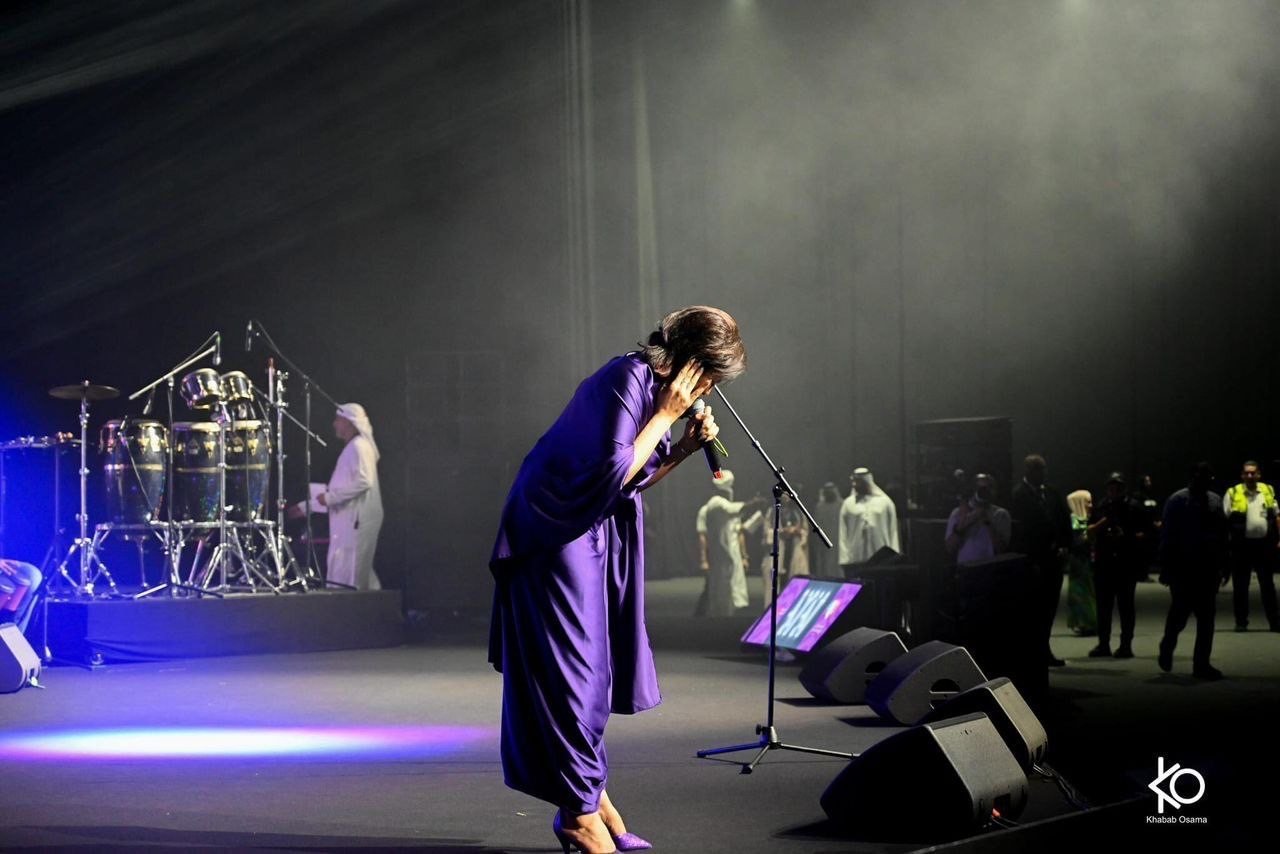
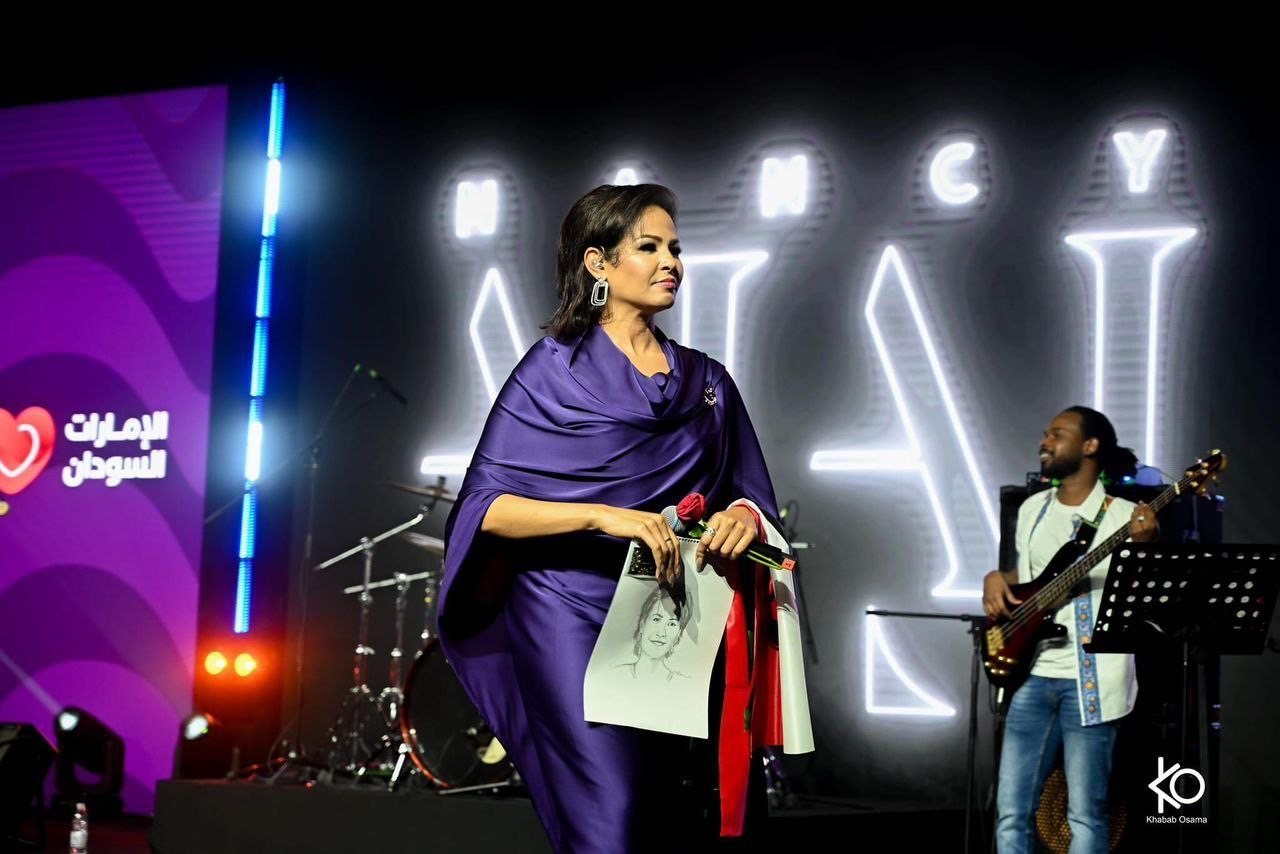
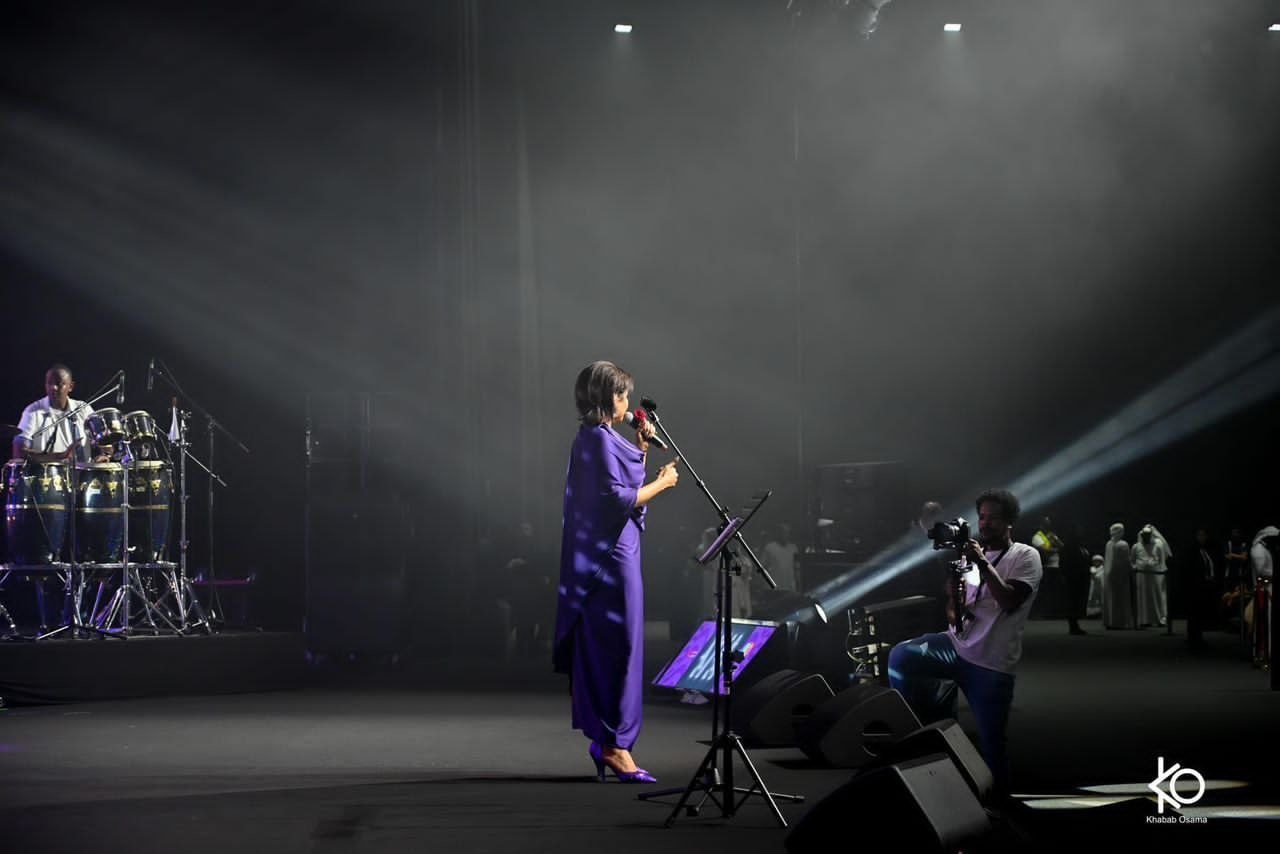
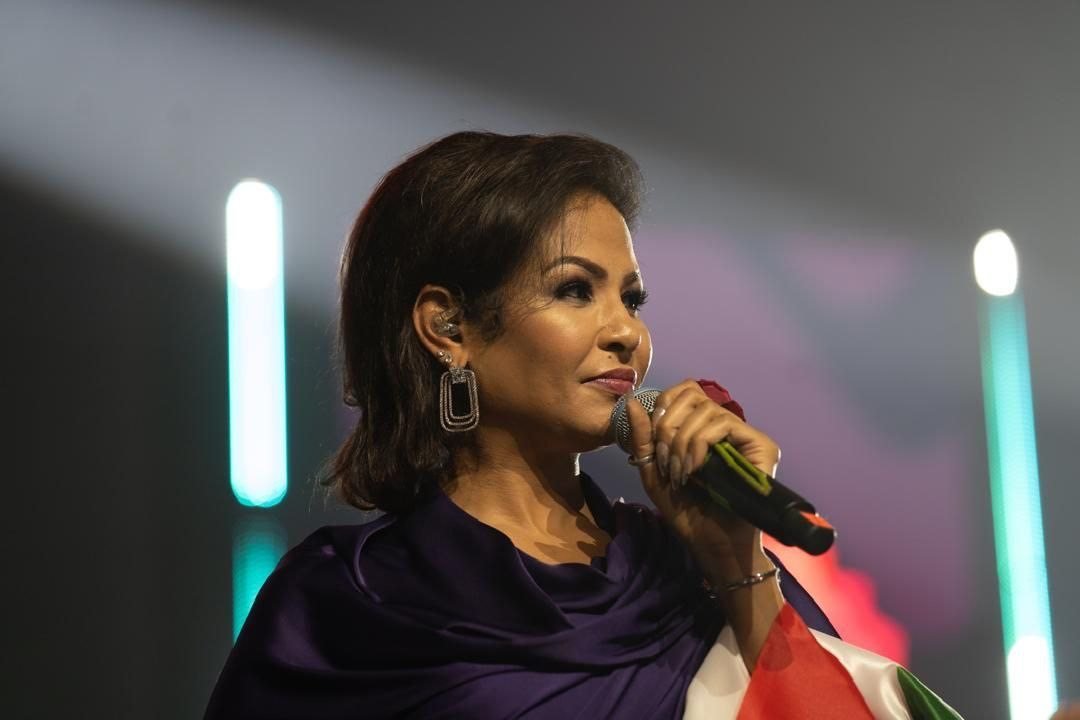
Her repertoire joins songs by older Sudanese masters with her own compositions, in modern arrangements played by her band of professional musicians.[2] Since 2005 she has performed in Sudan, the UAE, Saudi Arabia, Qatar, Iraq, the United States, the United Kingdom, Canada and the Netherlands.[8]
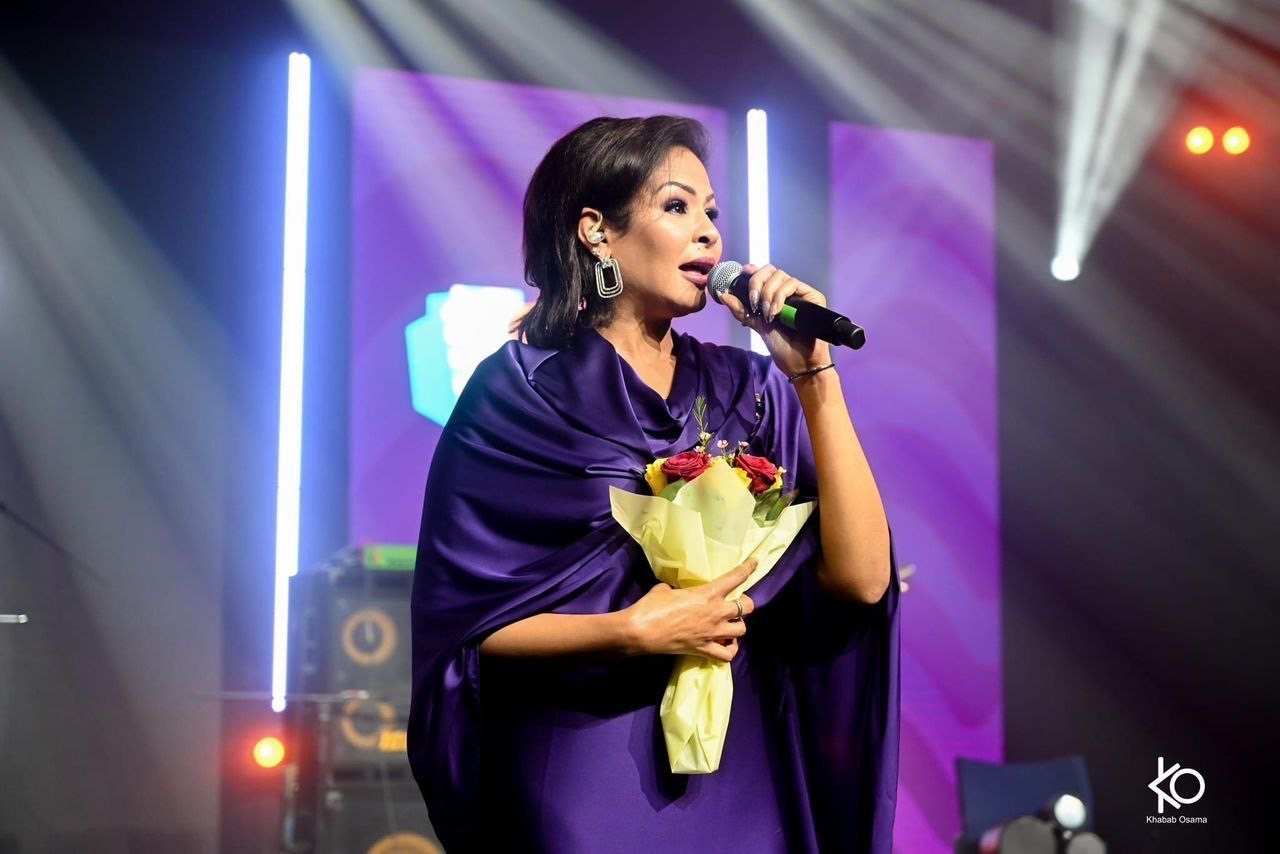 FROM THE ARCHIVE · NA-PH-0001A bouquet from the audiencePhotograph · source and rights in the record
On stage and in the street
She was one of few women singers to perform without the headscarf that Omar al-Bashir's government required until 2019.[3]
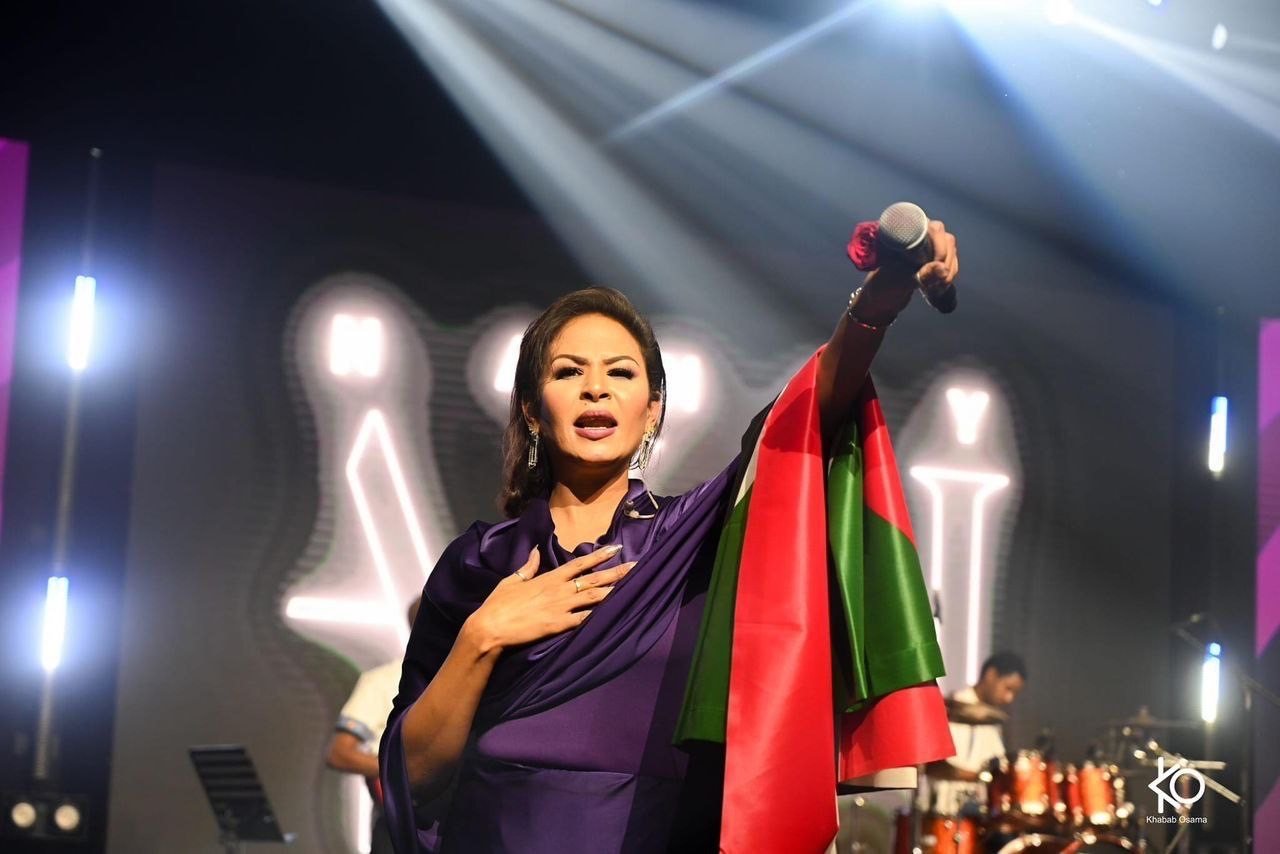
During the December Revolution of 2018 and 2019 she released "Milad" (Birth).[2] An academic paper read her song "Al-Neel Saleel al-Akrameen" alongside Alaa Salah's chant "Thawra" as examples of how women singers helped mobilise people and shape national identity during the revolution.[4] The Nation listed her music among the art that backed the 2019 uprising.[7]
Milad (Birth)
Nancy Ajaj · December Revolution · [duration]
A voice against the war
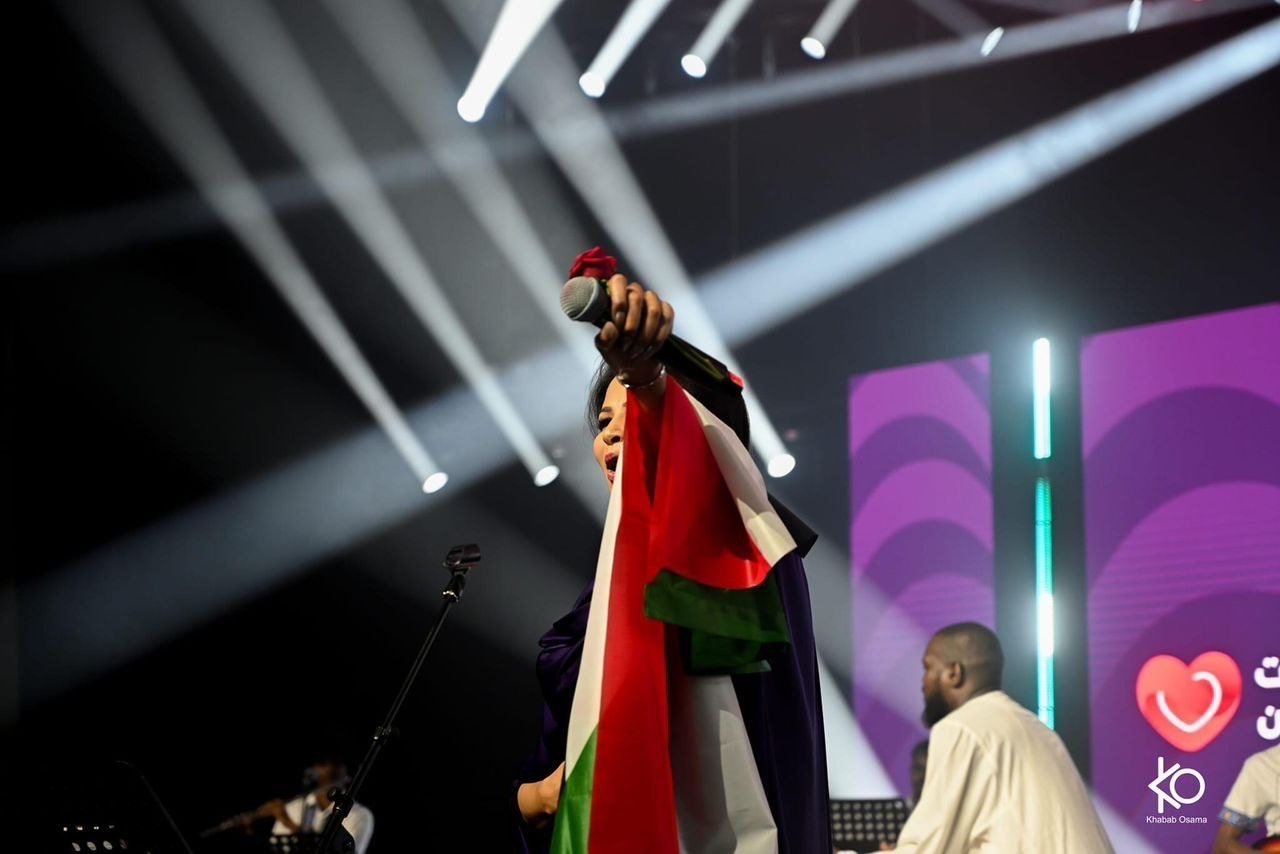
Since the war began in April 2023, she has joined an event organised by civilian groups calling for it to end, alongside the poet Azhari Mohamed Ali and the theatre artist Mohamed Taros. The songs she and Abu Bakr Sid Ahmed performed drew a strong response from the audience.[5]
In December 2016 UNICEF named her its national ambassador in Sudan. She had already fronted two campaigns, one for handwashing with soap and water and one for exclusive breastfeeding in a child's first six months.[6]